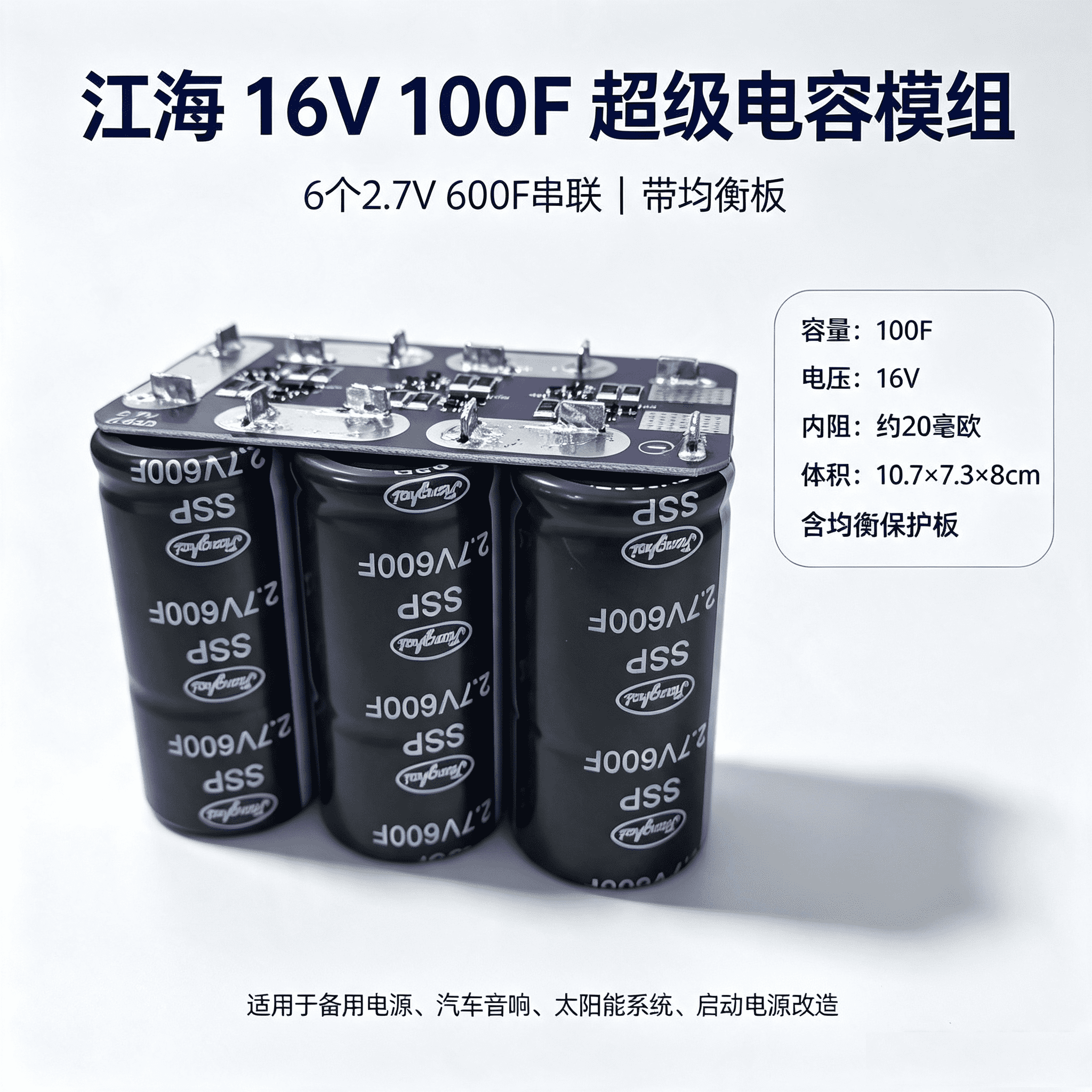
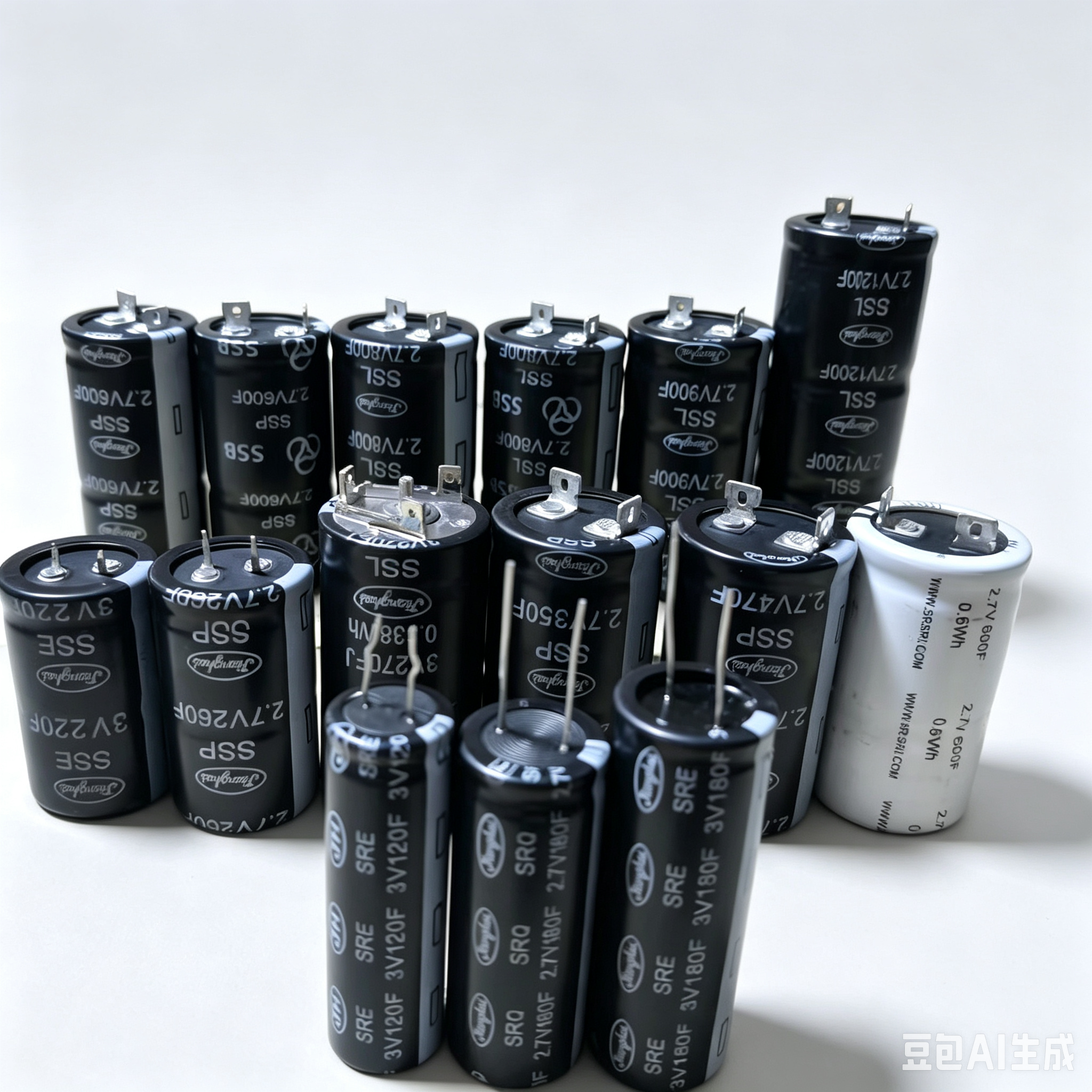
Solar energy is one of the fastest-growing renewable energy sources worldwide, but it has a fundamental challenge: intermittency. Solar panels only generate power when the sun shines, and output fluctuates rapidly with passing clouds, temperature changes, and shading. This is where EDLC supercapacitors (ultracapacitors) play a crucial role. In this article, we explore how supercapacitors improve solar energy storage systems and why they are increasingly being integrated into both off-grid and grid-tied solar installations.
The Solar Energy Storage Challenge
Solar photovoltaic (PV) systems generate DC power that fluctuates on timescales from milliseconds to hours. These fluctuations create several problems:
- Power quality issues — Rapid voltage fluctuations can damage sensitive equipment and cause grid instability
- Battery degradation — Frequent shallow charge-discharge cycles from cloud passing accelerate lithium-ion battery wear
- Inverter stress — Rapid power changes force inverters to work harder, reducing efficiency and lifespan
- Grid voltage fluctuations — For grid-tied systems, sudden power changes can cause voltage violations
- UPS bridging — During grid outages, there is a gap before backup generators or battery inverters activate
Lithium-ion batteries alone are not ideal for handling these rapid fluctuations because they have limited cycle life (500–3,000 cycles) and slower response times. This is where supercapacitors excel.
Why Supercapacitors Are Ideal for Solar Applications
EDLC supercapacitors possess several properties that make them perfectly suited for solar energy storage:
1. Ultra-Fast Charge and Discharge
Supercapacitors can charge and discharge in seconds, matching the rapid fluctuations of solar power output. When a cloud passes over a solar array, output can drop by 50–80% in less than a second. A supercapacitor can instantly inject stored power to bridge this gap, then recharge just as quickly when the sun reappears. Lithium-ion batteries simply cannot respond this fast without degradation.
2. Extremely Long Cycle Life
With 500,000 to 1,000,000 charge-discharge cycles, supercapacitors can handle the millions of shallow cycles caused by daily cloud passing over a 20–30 year system lifespan. A lithium-ion battery would need replacement 5–10 times over the same period.
3. High Power Density
Supercapacitors can deliver very high peak currents (up to 15,000 W/kg), making them ideal for absorbing or injecting large bursts of power during rapid solar fluctuations. This is critical for power smoothing and peak shaving applications.
4. Wide Temperature Range
Most EDLC supercapacitors operate reliably from -40°C to +65°C, covering the extreme temperature conditions found in solar installations (rooftops, desert installations, cold climate off-grid systems). Lithium-ion batteries suffer significant performance degradation below 0°C.
5. Low Maintenance
Supercapacitors require no complex battery management system (BMS) for individual cells, no thermal management (in most applications), and no periodic equalization. They are essentially set-and-forget components.
Key Supercapacitor Applications in Solar Systems
1. Power Smoothing (Output Flattening)
This is the most common supercapacitor application in solar systems. The supercapacitor bank is connected between the solar array and the inverter (or battery). It absorbs excess power during sudden output spikes (cloud clearing) and injects power during sudden drops (cloud passing). The result is a smooth, stable power output that protects the inverter and improves power quality.
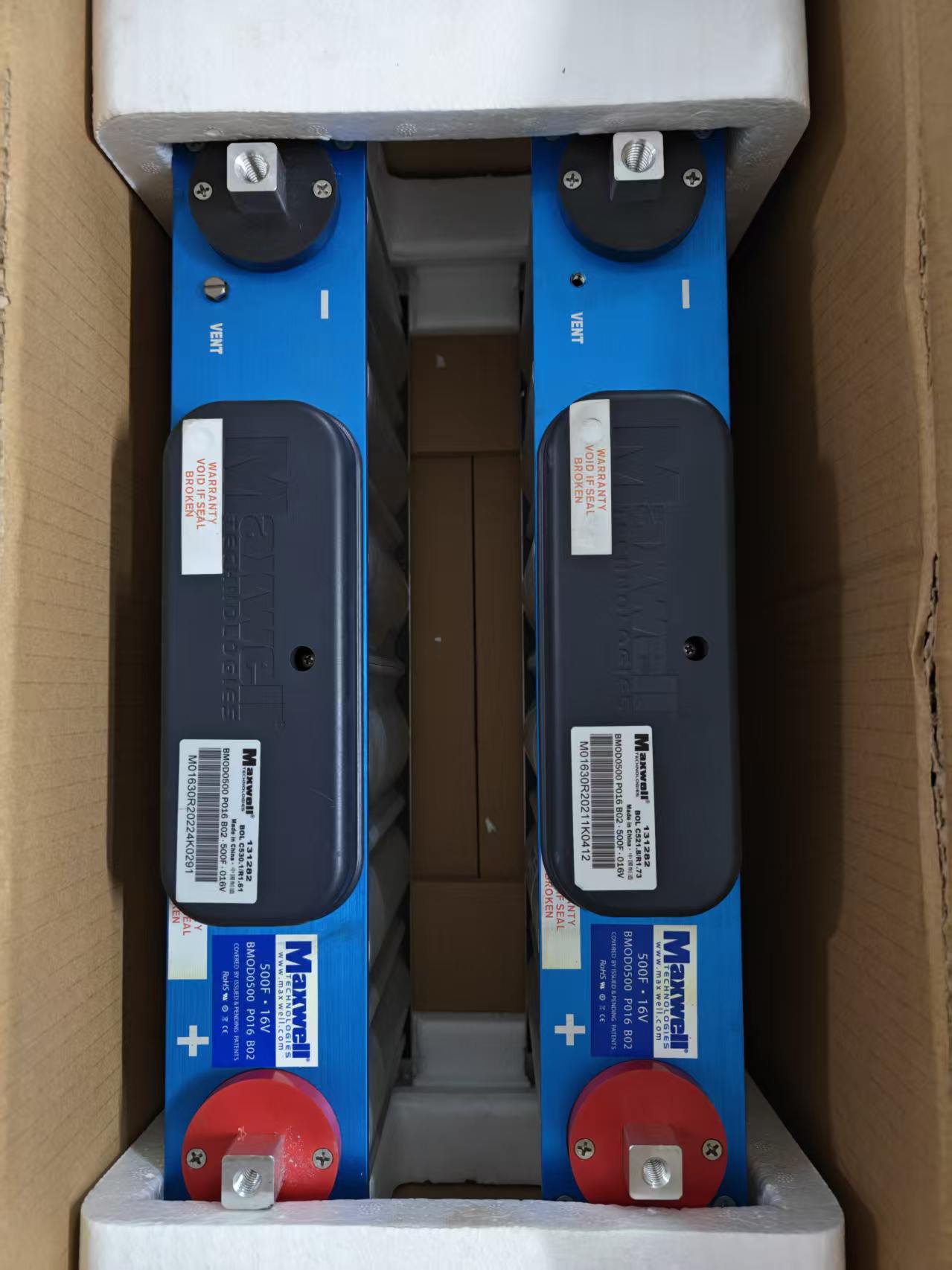
Typical configuration: A 16V 500F supercapacitor module can smooth several kilowatts of solar power fluctuation for 5–15 second durations.
2. Peak Shaving
In grid-tied solar systems, peak shaving reduces the maximum power fed into the grid, avoiding demand charges and grid voltage violations. The supercapacitor absorbs power during peak generation periods and releases it during lower-output periods, flattening the power profile. Because peak shaving involves frequent cycling, supercapacitors are far more durable than batteries for this application.
3. UPS Bridging (Uninterruptible Power Supply)
In off-grid solar systems with backup generators, there is typically a 5–30 second gap between grid power failure and generator startup. During this gap, critical loads (computers, communication equipment, medical devices) would lose power. A supercapacitor UPS module can bridge this gap instantly, providing seamless power transfer. Supercapacitor UPS systems are more reliable than battery UPS because they require no maintenance and have virtually unlimited cycle life.
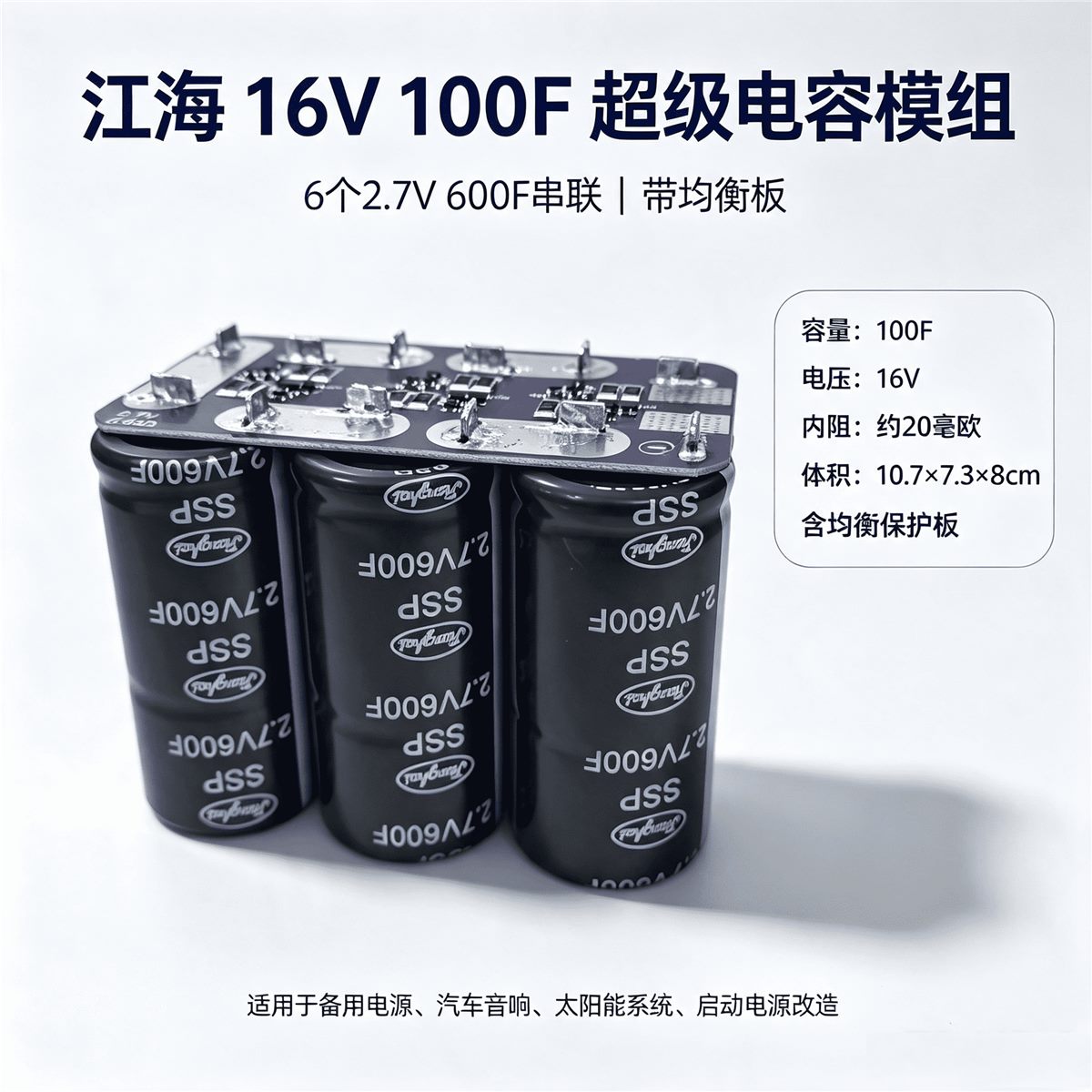
Typical configuration: A 16V 100F module can provide 500W–1kW of backup power for 10–30 seconds, sufficient for generator bridging.
4. Hybrid Battery-Supercapacitor Storage Systems
The most advanced solar storage systems combine supercapacitors and lithium-ion batteries in a hybrid architecture. The supercapacitor handles all high-frequency, short-duration fluctuations (cloud passing, load switching), while the battery handles long-duration energy storage (nighttime backup, load shifting). This division of labor provides several benefits:
- Battery life extension — By 2–3x, because the battery no longer experiences frequent shallow cycling
- Improved efficiency — Supercapacitors have 95–98% round-trip efficiency vs. 85–95% for lithium-ion
- Better low-temperature performance — Supercapacitors handle cold-weather cycling where batteries struggle
- Reduced system cost — Smaller battery bank required, offsetting supercapacitor cost
5. Solar Tracking System Power
Solar tracking systems that tilt panels to follow the sun require bursts of power to drive motors. A small supercapacitor can provide these peak power bursts, reducing the power supply requirements and improving tracking system reliability.
6. Energy Harvesting for IoT Solar Sensors
In remote solar monitoring systems (weather stations, soil moisture sensors, panel performance monitors), small supercapacitors (0.5F–10F) store energy harvested from small solar cells. They power the sensor and radio between charging cycles, providing maintenance-free operation for years. Supercapacitors are preferred over batteries in these applications because of their unlimited cycle life and ability to charge from weak light sources.
System Design Considerations
Voltage Matching
Select a supercapacitor module voltage that matches your system bus voltage. Common solar system voltages are 12V, 24V, 48V, and 96V. We offer 16V modules suitable for 12V systems, and can configure custom modules for higher voltages. Always use a supercapacitor voltage rating 20–30% above the maximum system voltage for safety margin.
Sizing the Supercapacitor Bank
Calculate the required capacitance based on the power and duration of the fluctuations you need to smooth:
C = 2 × P × t / (V_max² − V_min²)
Where P = power to smooth (W), t = duration (seconds), V_max/V_min = voltage range. Contact our engineering team for help sizing your supercapacitor bank.
Cell Balancing
For multi-cell supercapacitor modules, cell balancing is essential. Our pre-assembled 16V modules include integrated passive balancing circuits. For custom high-voltage banks, active balancing is recommended for maximum efficiency.
Real-World Example: Off-Grid Solar Installation in India
A telecommunications tower in rural India operates on a 5kW solar array with a 48V lithium-ion battery bank. Before adding supercapacitors, the battery experienced 200–300 shallow cycles per day from monsoon cloud passing, requiring replacement every 18–24 months. After installing a 48V 250F supercapacitor bank for power smoothing, battery cycling was reduced to 5–10 deep cycles per day, extending battery life to 5–7 years. The supercapacitor bank paid for itself in battery replacement savings within 18 months.
New vs. Used Supercapacitors for Solar Projects
For budget-constrained solar projects, tested used supercapacitors can be an excellent option. Solar power smoothing and UPS bridging are ideal applications for used units because they involve frequent cycling (where supercapacitor longevity matters most) and do not require maximum energy density. At XDXT Electronics, every used supercapacitor is tested for capacitance, ESR, and appearance before shipment.
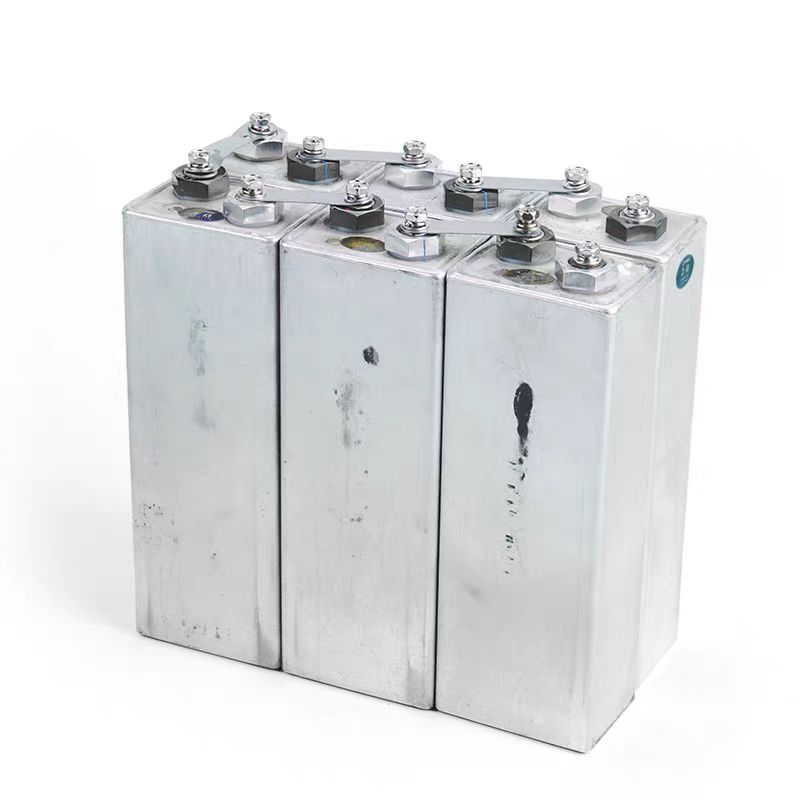
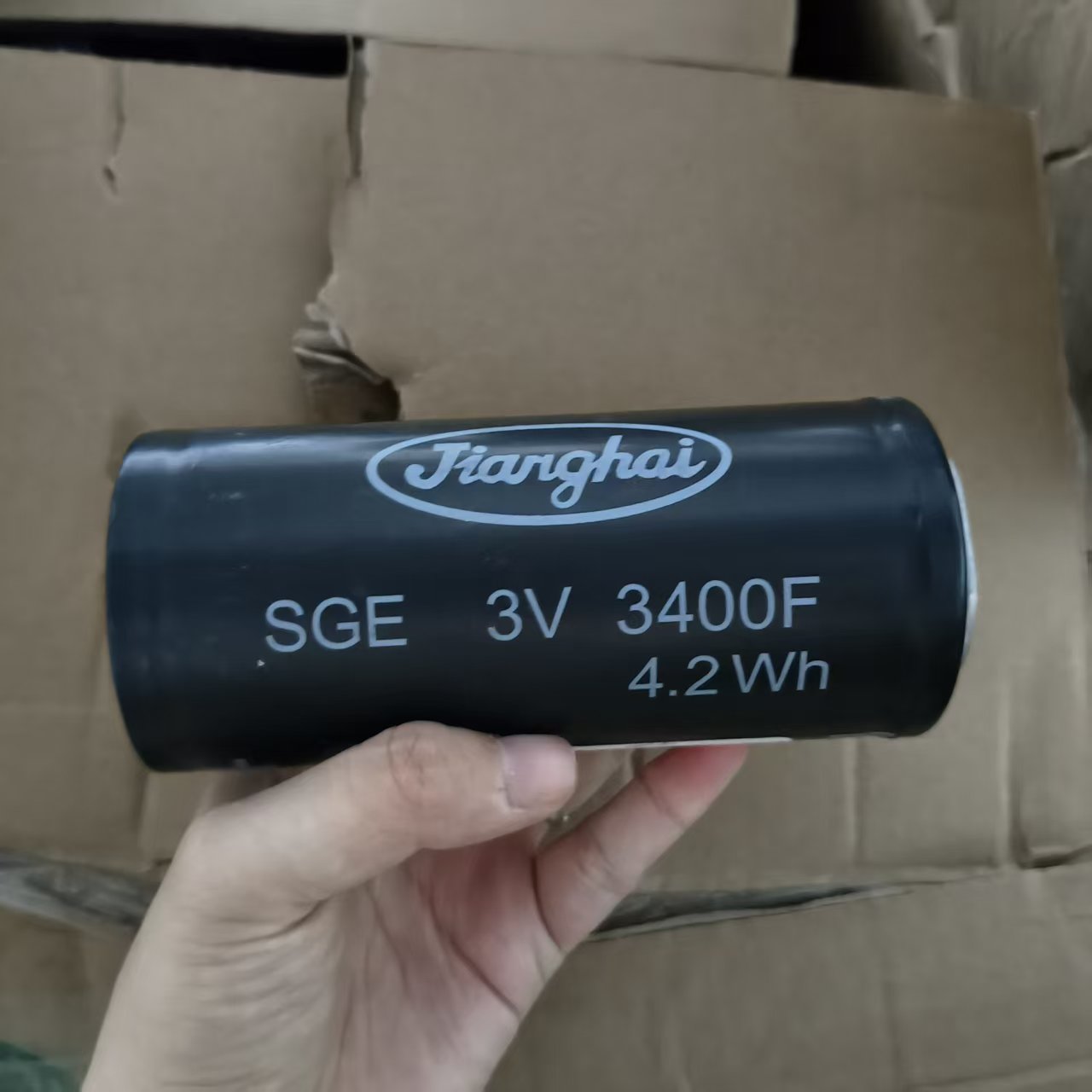
Contact us via WhatsApp for current used stock — we frequently have tested 16V 500F modules and 2.7V 3000F cells ideal for solar storage projects at 40–60% below new pricing.
Conclusion
EDLC supercapacitors are a powerful addition to solar energy storage systems, addressing the intermittency and fluctuation challenges that batteries alone cannot efficiently handle. From power smoothing and peak shaving to UPS bridging and hybrid storage architectures, supercapacitors improve system reliability, extend battery life, and reduce total cost of ownership. As solar energy continues to grow worldwide, supercapacitors will play an increasingly important role in making solar power stable, reliable, and cost-effective.
Ready to integrate supercapacitors into your solar project? Send us your specifications via WhatsApp and our engineering team will recommend the optimal supercapacitor cell or module for your application, with wholesale pricing and worldwide shipping.